
Role:
Director of Design
Year:
2025
B2B
B2B2C
SaaS
Design
Research
Brand
App
Web
AI
my Role
Instant Group, a well-established corporate real-estate business, sought to realise a new marketplace venture called Worka, that aims to disrupt the global corporate real-estate market.
What I achieved
Shipped 3 new products in 18 months and grew enough value for the business to be acquired.
Partnered with leadership to define the product vision and roadmap.
Established a new digital brand, complete with new illustrations, typefaces, assets, templates...
Built the framework for how we prioritise, plan, and ship work.
Setup and bedded-in agile product squads, embedding Design within each.
Built a high-performing team that kept its quality and pace, even with frequent change.
Cultivated a design culture from scratch.
Transitioned Design from "just shipping" to long-term ownership and expertise.
What Is Worka?
Worka is a flexible workspace marketplace, based on a portfolio of 3 products underneath.
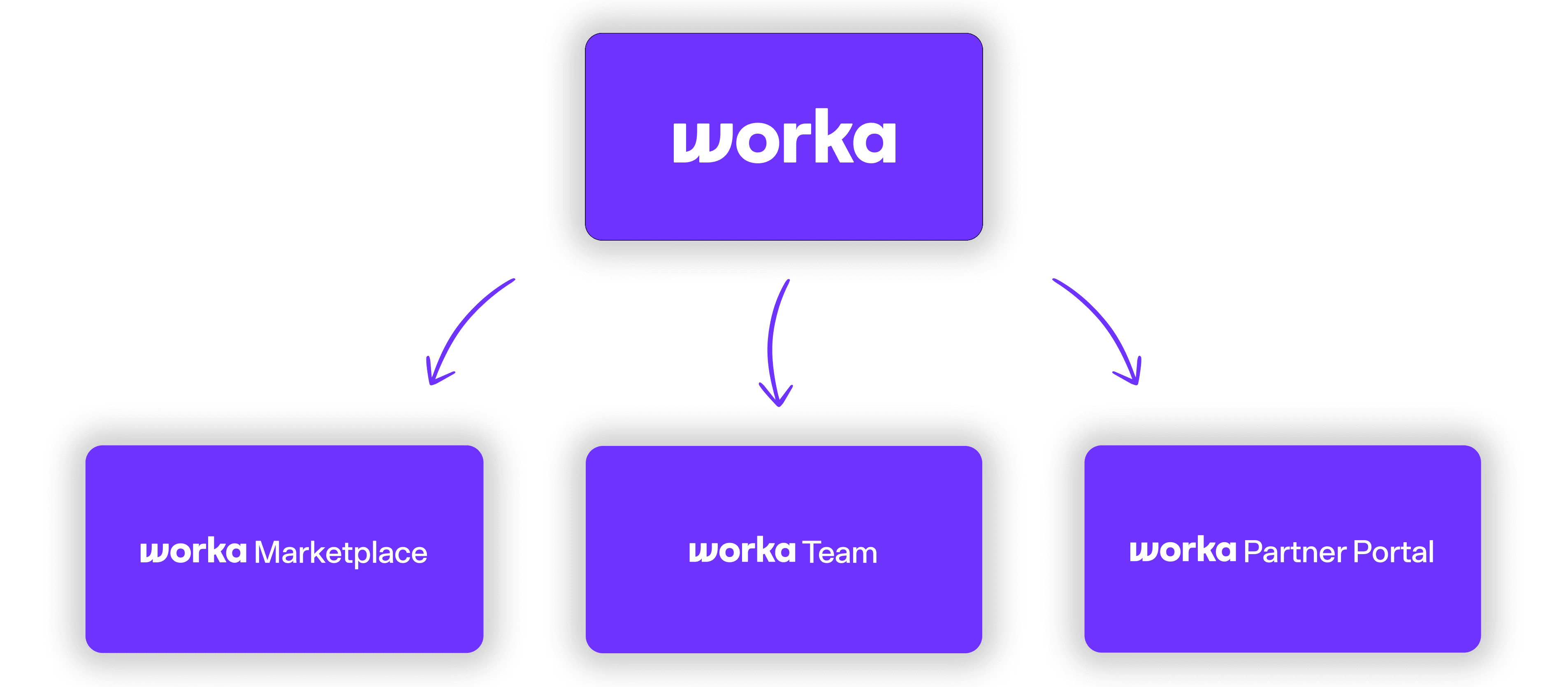
Worka enables users to find and book quality workspaces, ranging from desks and meeting rooms to entire offices. It’s like an "Airbnb, but for Desks, Meeting Rooms, Offices, etc."
Who are Worka’s customers:
Small-large businesses, looking to save on workspace needs.
Individual workers, that want convenience and lower costs.
Small businesses, seeking workspace.
Worka launched into private Beta in late 2025.
Defining the strategy, vision and customers
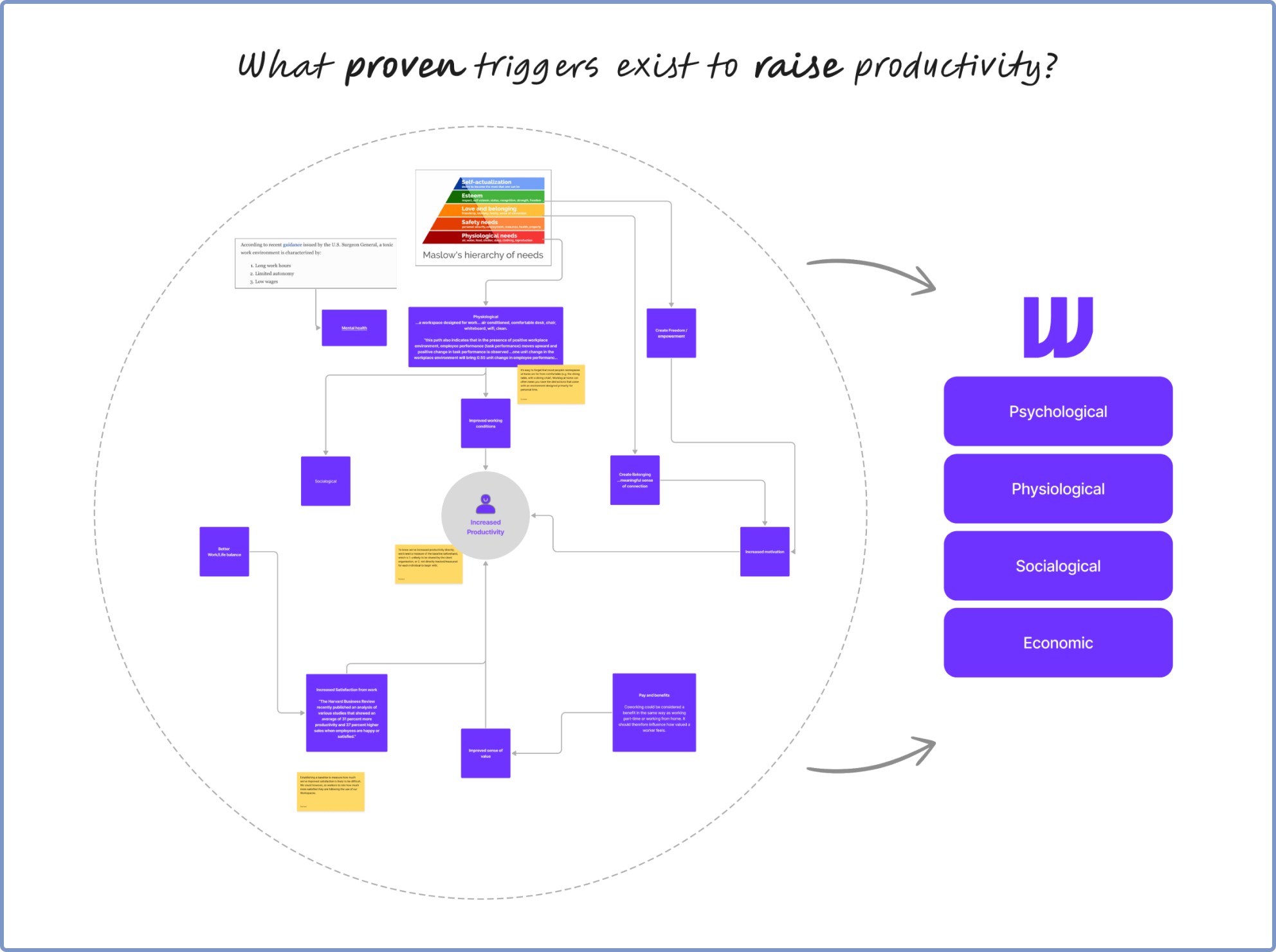
The high-level marketplace idea existed when I joined, but the specifics didn't. I drove the initial discovery work and commissioned the research we needed to validate our product-market fit and lock in a concrete proposition.
Hiring & Scaling The Team
Having the foundational ‘Discovery’ in place, I now needed a team to help me deliver.
Scaling at speed: To hit our aggressive 18-month launch timeline, I initially scaled the team using a dynamic pool of 10+ specialist freelancers (UX, UI, Research, Copy, Illustration), swapping expertise in and out exactly when the product phases needed it.
Securing the permanent budget: As we planned our transition to 'Business As Usual' (BAU), I worked with Product and Engineering to map out our 3-year roadmap. I presented the trade-offs of using fast-moving contractors versus building long-term permanent ownership, successfully agreeing on a new hiring budget with the CTO and CFO.
Redesigning the interview: Because close collaboration was make-or-break for our agile squads, I completely rebuilt the permanent hiring process. I designed a specific interview task focused on testing partnership and strategic thinking rather than just basic design execution—some candidates even told us they enjoyed it!
Plug-and-play onboarding: To ensure our rotating freelancers and new permanent hires could hit the ground running, I built out comprehensive onboarding and offboarding guides, along with core Design Resources and competency frameworks to guarantee immediate alignment.

Design Foundations
Prior to my joining the business, Instant had worked with an agency to define a basic brand, but it was missing detail on what products might look like.
Establishing the brand
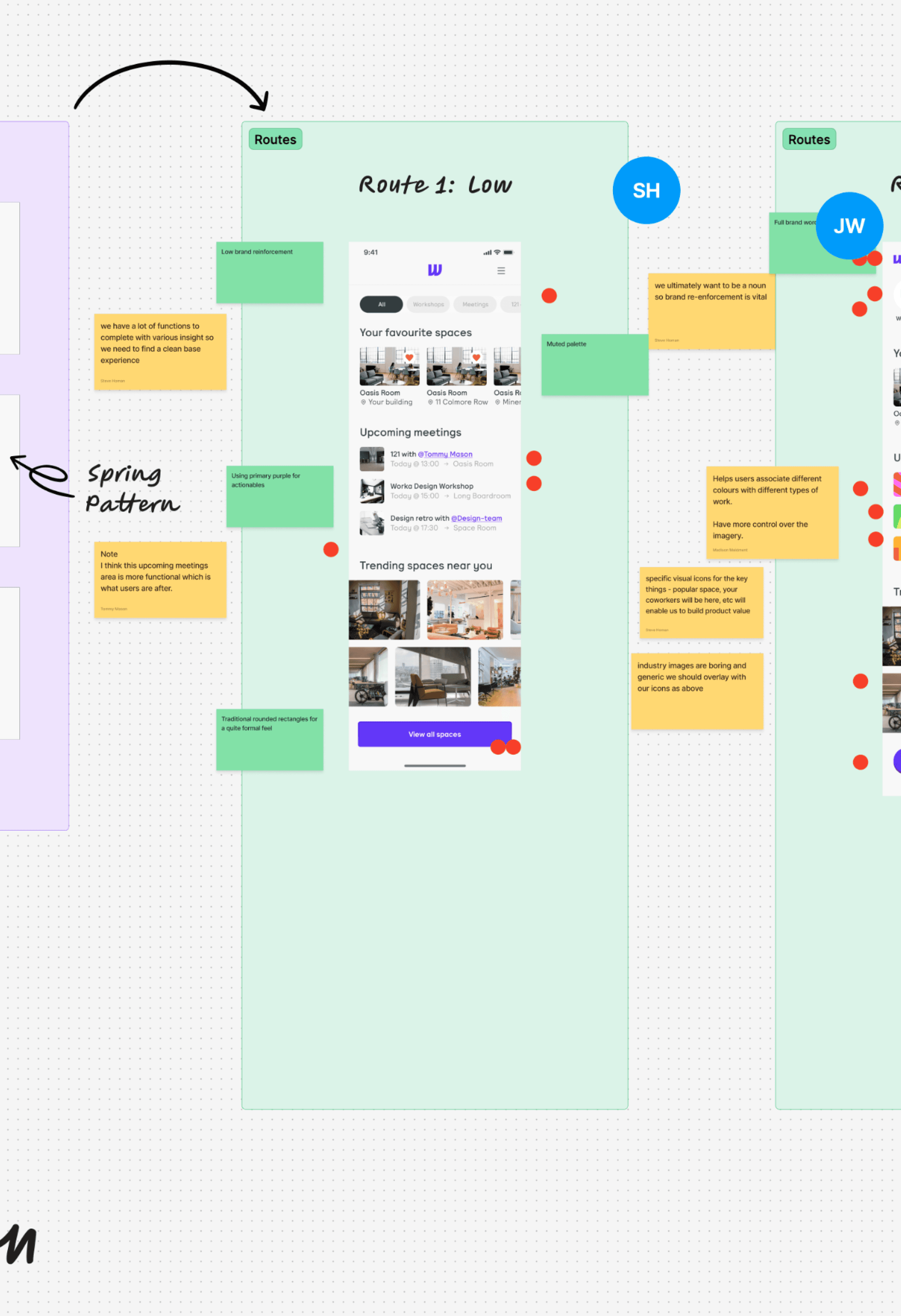
I led the exploratory design phase, presenting leadership with several distinct visual concepts. Through a series of positioning workshops, I secured sign-off on a final direction, and this allowed us to establish the foundational "atoms" of our new Design System
Designing the Design system
When the constraints of our legacy tech stack threatened to bottleneck our progress, I worked directly with Engineering Leads to find a pragmatic solution; We agreed a branched, static Design System—one core system feeding three distinct child sub-systems.
Taking on this extra complexity within the design team was a deliberate, strategic trade-off: it massively accelerated our engineering velocity, allowing us to ship much faster while keeping the end-user experience seamless.
Planning and organising the work
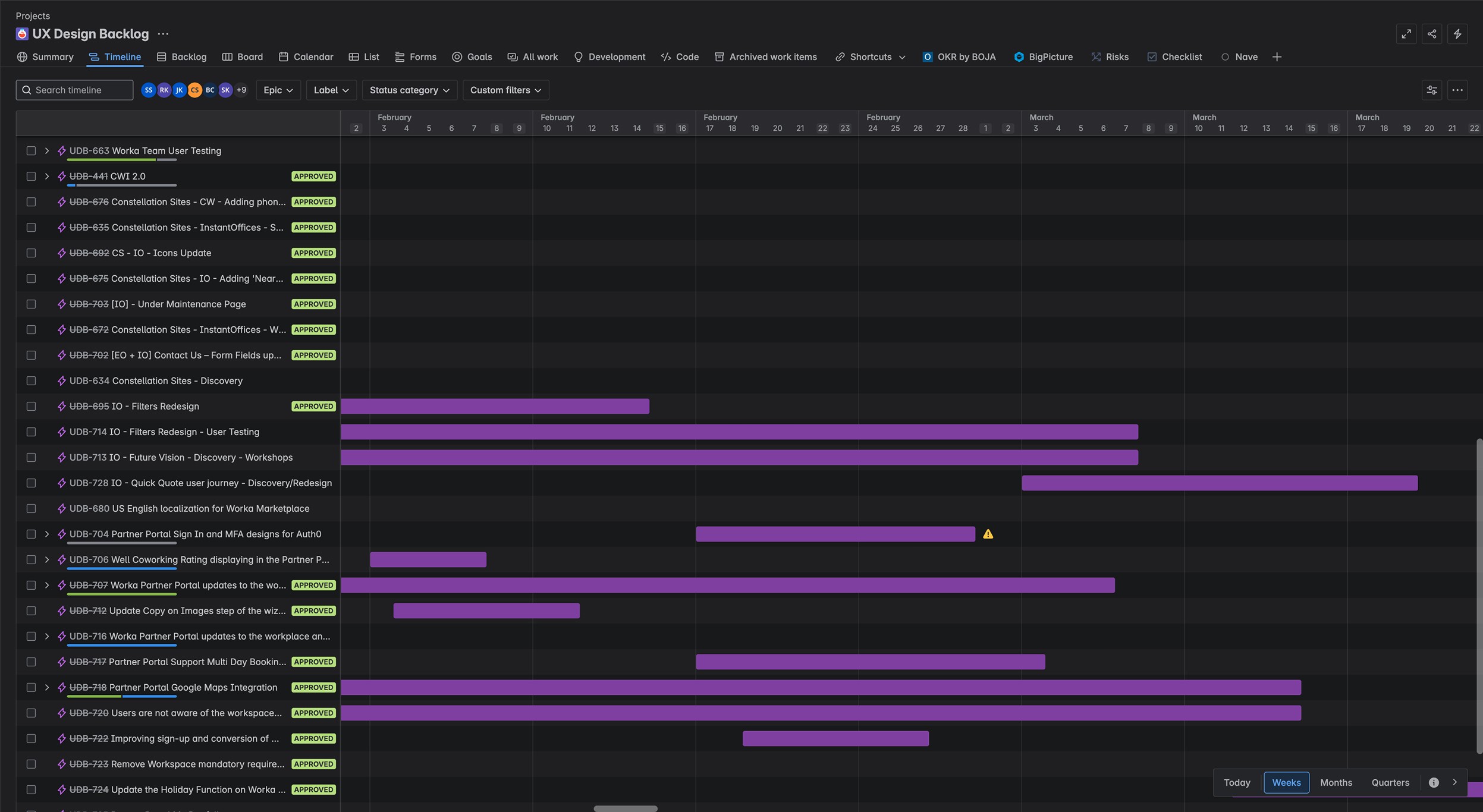
To deliver our MVP release successfully, I designed and managed the Design backlog and plan. It was built on real estimates and dependencies, and was critical unlocking the team’s productivity. Without a plan, delivery would have been an uncoordinated mess!
The backlog and plan also enabled transparency with leadership, on progress and pace.
Creating Routine & Belonging
Belonging came naturally when we were a scrappy team of three. However, as the team scaled up to tackle more complex backlogs and roadmaps, I introduced more routines, structure, and the social forums, necessary to maintain that tight culture. Here are some highlights...


Managing Growth & Performance
Because my team was built around senior and lead-level designers, I didn't need to micromanage. I prioritised coaching over managing—caring about the final outcomes rather than dictating exactly how the work got done.
I acted as a strategic sounding board for my team’s ideas, whilst working behind the scenes to clear blockers, line-up resources, and offer support.